

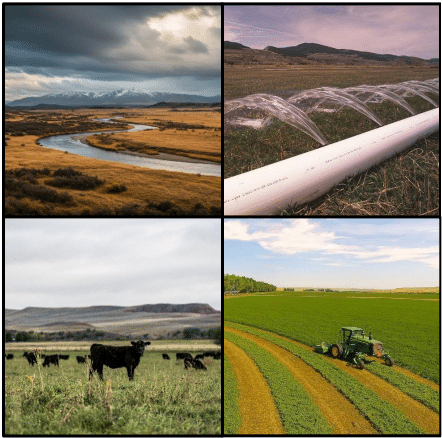
In the fall of 2025, Mark Gordon convened a working group to develop a long-term strategy to preserve and strengthen the state’s agriculture industry. The resulting Cowboy State Agriculture Initiative Final Report outlines recommendations aimed at keeping Wyoming’s working lands productive for generations to come.
Agriculture remains a cornerstone of Wyoming’s economy and culture. The state leads the nation in average farm and ranch size at roughly 2,400 acres, with more than 29 million acres in production and an annual economic contribution exceeding $2.5 billion. Beyond dollars, the report emphasizes the value of open space, wildlife habitat, water resources, and the cultural heritage rooted in farming and ranching.
The report centers on four major areas: farm and ranch financing, water infrastructure and rights, education and applied research, and succession planning.
Access to capital remains a major hurdle, especially for young and beginning producers. State loan programs administered through the Wyoming Office of State Lands and Investments have seen declining participation, and federal age and experience requirements often don’t align with Wyoming’s demographics. The working group recommends exploring more competitive interest rates, restructuring loans to better reflect ag income cycles, and evaluating the level of risk the state is willing to assume to better serve producers.
Marketing and trade challenges were also highlighted. While Wyoming exports commodities such as beef, dry beans, and wool, limited in-state processing capacity and long distances to major markets create bottlenecks. The report suggests developing regional distribution hubs, expanding cold and dry storage, and incentivizing mid-sized processing facilities to improve value-added opportunities.
Water remains a pressing concern. Aging infrastructure—some more than a century old—poses significant financial challenges. A recent review found about 20 percent of evaluated structures in poor or failing condition, with repair costs for just a fraction of them potentially exceeding hundreds of millions of dollars. Recommendations include exploring new funding mechanisms, reviewing account caps, and providing additional outreach to water management entities.
Education and workforce development are also central themes. The initiative calls for expanded K-12 agriculture and natural resource curriculum options, recognition programs for schools excelling in ag education, and long-term funding to support the state’s land-grant mission, applied research, and workforce training programs.
Finally, succession planning is identified as critical to keeping working lands intact. With the average Wyoming producer nearing 60 years old, the report encourages expanded planning resources, diversified business models, and coordination with federal agencies to ensure grazing allotments remain part of viable operations.
Throughout the document, one overarching goal remains clear: maintaining functional working lands that provide food, fiber, habitat, water, and open space.
The working group concluded that while many of the challenges are not new, coordinated action across public and private sectors will be essential to ensure Wyoming agriculture remains resilient in the decades ahead.
####
Northern Ag Network – 2026