

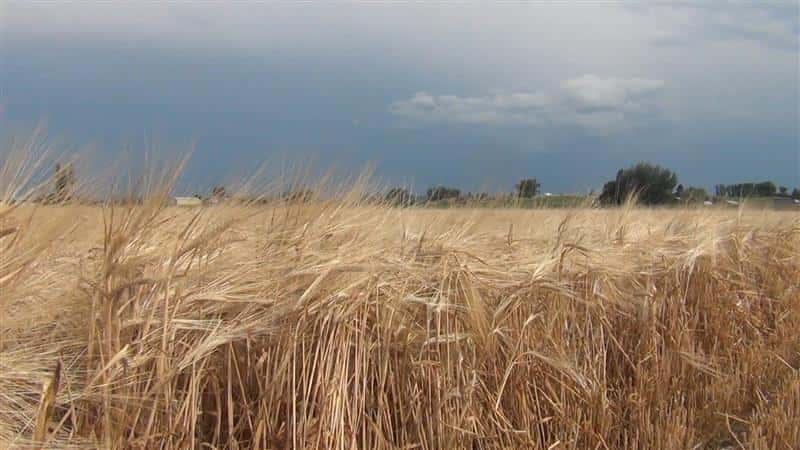
The American Malting Barley Association (AMBA) Sustainability Committee has published the first ever emissions report from U.S. barley production, using real farm data. The Baselining Barleyproject was a collaborative effort between farmers and industry end-users to articulate the environmental impact of barley production, focusing on greenhouse gas emissions. The work confirmed the very sustainable nature of the barley crop, but did identify areas of opportunity where emissions could be reduced through various interventions. The association pursued this work to support efforts by their industry members to better account for their supply chain emissions and strive towards reduction goals.
The pilot project leveraged data from 33 farms across the primary barley growing regions that were producing barley on contract for malting and brewing companies. The comprehensive data collection effort assessed the 2024 crop year and included review of production practices, soil type, crop yield, and water management. Neil Fuller, consultant with Atlas Geo-Data Ltd, was the data steward ensuring accuracy of input data and appropriate use of the Cool Farms Tool to calculate emissions. “Getting data direct from farms is essential as it allows the project to showcase the incredible job U.S. barley farmers are doing, not only in producing top-quality grain, but in delivering a stack of environmental benefits that accompany that grain from soil to glass,” Fuller shared.
The full report can be accessed at the AMBA website, which illustrates these findings:
- The aggregate carbon intensity score was 15.74 pounds of CO2e per bushel of barley produced. Rain-fed crops produced 13.39 pounds of CO2e, whereas irrigated barley produced 16.76 pounds of CO2e per bushel. Energy consumed to run irrigation systems was the primary driver for the difference. This highlights a very tangible opportunity to convert systems to renewable energy, driving down carbon intensity.
- Nitrogen fertilizer use, which was similar across rain-fed and irrigated systems, consistently ranked the highest single category of produced emissions, at times being responsible for a quarter or more of the total emissions. This supports efforts underway by AMBA to identify fertilizer sources that have a lower carbon intensity, while still supporting a high yielding and high quality crop.
- The default values found in the Cool Farms Tool consistently over-estimate emissions, highlighting the importance of farms collecting and reporting accurate data to ensure sound measurements. Furthermore, with only 33 datasets included in the pilot year, more data is needed to comply with protocols such as the Science-Based Targets initiative (SBTi), which is often needed to export into international markets. This supports a more robust data collection effort in subsequent crop years.
AMBA Sustainability Committee co-chair, Walker Modic from New Belgium Brewing Company, highlights the importance of this work for their business. “Mitigating our contribution to a changing climate calls for close collaboration with experts across our value chain. Leveraging that expertise requires a shared understanding and a common language for the work ahead. The project AMBA led provides just that, a clear, empirical understanding of where we are today, where our greatest opportunities exist, and a shared understanding of the implications of different solutions.”
As a result of the project, AMBA members now have access to a data monitoring tool that will allow them to continue to baseline their barley supply and track continuous improvement across the landscape. Industry is grateful for the partnership with the National Barley Growers Association and the farmers they represent, who committed time and farm data to this effort. Their support acknowledges the importance of this knowledge to preserve, promote, and expand market opportunities for U.S. barley.
In addition to the report, a webinar on the results is available on AMBA’s YouTube channel.
####
AMBA – 2026