

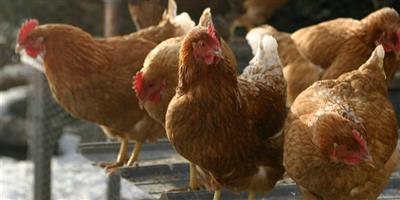
The Wyoming Livestock Board (WLSB) and USDA Animal and Plant Health Inspection Service
(APHIS) confirmed the presence of highly pathogenic avian influenza (HPAI) in a Carbon County
backyard poultry flock. This is the second case of HPAI in Wyoming backyard poultry this season, and
the fourth reported in 2025. Samples from the flock were tested at the Wyoming State Veterinary
Laboratory, part of the National Animal Health Laboratory Network, and confirmed at the APHIS
National Veterinary Services Laboratories in Ames, Iowa. The affected premises is under quarantine to
prevent further exposure to HPAI.
Avian influenza is an infectious viral disease of birds that can cause high mortality rates in domestic
flocks. Migratory waterfowl are the primary source for avian influenza. Wild birds can be infected and
appear healthy, but shed virus in feces, saliva, and respiratory secretions. Domestic poultry become
infected through direct contact with infected wild birds, or through contact with contaminated objects,
equipment, or the environment. Multiple wild birds have tested positive for HPAI within the last few
months across the state. The Wyoming Game and Fish Department (WGFD) reports the location of wild
birds that test positive for the virus on their website https://content.govdelivery.com/accounts/WYLIVESTOCK/bulletins/40059a1
Improving flock biosecurity is the best prevention for exposure to avian influenza. Domestic poultry
should not be allowed contact with wild waterfowl. Poultry located near canals, ponds, rivers, or other
bodies of water are at increased risk of exposure, especially during migration periods. Biosecurity
measures can include cleaning vehicles and equipment, changing clothes upon contact with birds, and
limiting visitors. For additional information on biosecurity for small flocks, please visit healthybirds.info
or https://www.aphis.usda.gov/livestock-poultry-disease/avian/defend-the-flock.
Attentively monitor your birds for symptoms of HPAI, which include: coughing, sneezing, nasal
discharge, lack of energy and appetite, decreased water consumption, decreased egg production,
incoordination, and diarrhea. Avian influenza can also cause sudden death in birds.
If these symptoms are observed in your birds or you have increased mortality in your flock, immediately
contact your veterinarian or WLSB, (307) 777-7515.
HPAI is considered low risk to human health according to the U.S. Center for Disease Control, but
people should avoid contact with sick/dead poultry or wildlife. If contact occurs, wash your hands and
change your clothing before having any contact with poultry and wild birds. For information on
biosecurity measures, visit healthybirds.aphis.usda.gov.
Sick or dead wild birds may be reported to the Wyoming Game and Fish Department (WGFD) by calling
(307) 745-5865 or reporting online. You can also report to your nearest WGFD regional office.
###
Wyoming Livestock Board

https://wgfd.wyo.gov/wyoming-wildlife/wildlifedisease-and-health).
This link quoted near the start of the article does not work.