

By: Colton R. Young
The 2025-26 production sale season has nearly wrapped up across the Northern Ag Network region. Prices for bulls and replacement females were significantly higher than year-ago levels.
Kurt Kangas, director for the American Angus Association for Montana and Wyoming, said, “It was an extraordinary fall and spring sale season.”
With the sale season near completion, Kangas shared data that stood out to him, including the investment producers made in heifer bulls compared to cow bulls during the latter half of the season.
“It’s always interesting to watch the ebbs and flows of calving ease bulls and how those calving ease bulls trade,” Kangas said. “They can trade pretty close to what the cow bulls are trading for in the fall and January. We get to the end of April and the heifer bulls are bringing, on average, $1,500 more than the cow bulls, which is an interesting spread to look at.”
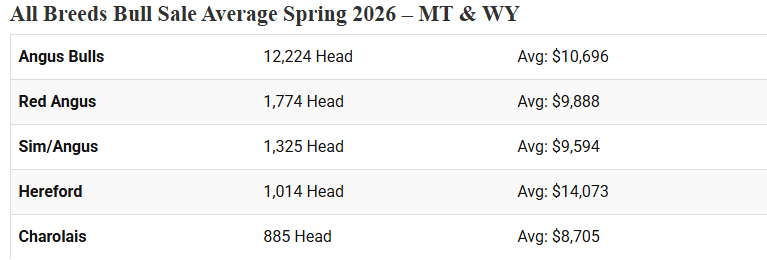
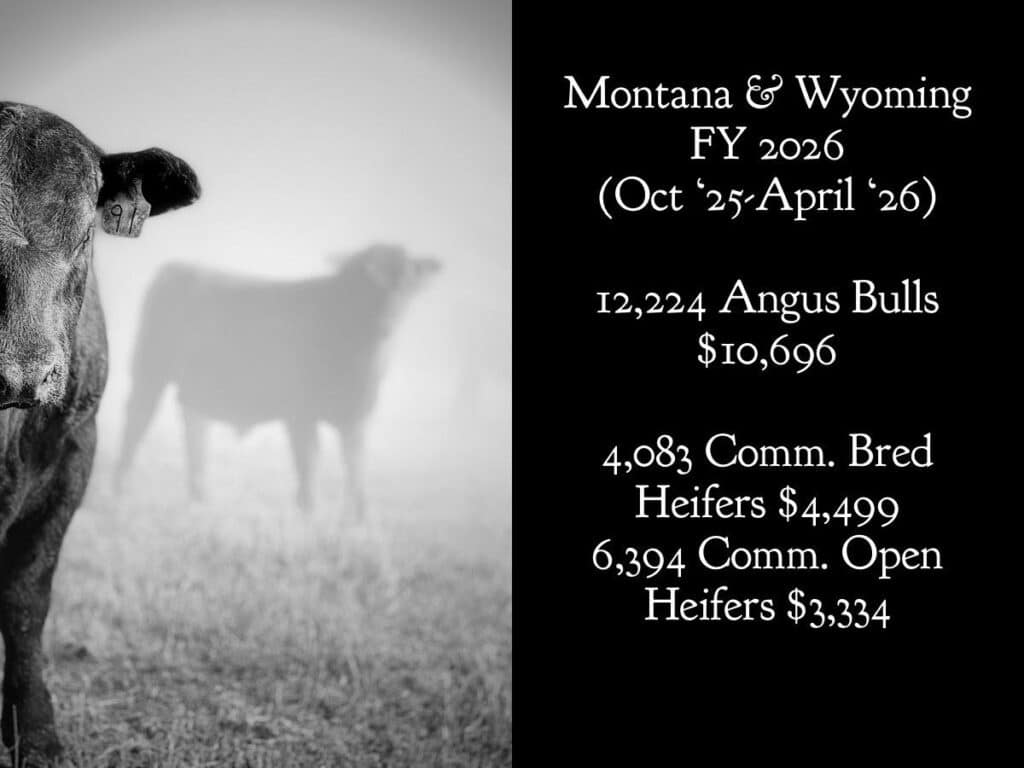
Not only were bulls in the spotlight this season, but female averages were also up tremendously. Commercial bred heifers for the year averaged 36% higher than 2025 levels, while commercial open heifers were 32% above the previous year.
“It was a heck of a fall for selling those bred heifers,” Kangas said. “Even into the spring, that January and February market for those bred heifers stayed strong, and as we got closer to those April cattle, prices came back pretty strong. In the fall, you could buy April calving heifers cheaper, but as we swung into the spring sale run, prices on those April calving heifers picked up.”
As the spring sale season wraps up, attention will now shift toward spring and summer grass conditions and, of course, the upcoming video sale season. Drought conditions across the northern region continue to persist, which could have a lasting effect on how producers market calves during the video sale season.
“It’s going to be interesting to see what people do,” Kangas said. “Whether they push forward into the marketing time that they’ll be in during that June market, are they going to try to get those cattle weaned early and save grass for the cows? Or are we going to see them wait to see if those prices look similar to what they did last summer?”
Many factors will play into producers’ decisions as they prepare to market cattle for the video sale season. Early delivery dates due to grass shortages could be a major factor, along with the high levels of volatility that have been on full display in the cattle market throughout the year. One thing that remains certain, however, is the record-tight cattle supply heading into summer.
As for the market outlook, Kangas noted, “My inclination is that prices will be slightly higher than last year. How much higher really depends on how much money is available. Money has to be getting tight. You can look at what heifer calves cost two years ago versus what they cost now. They’ve almost doubled in price. To maintain that same inventory, if producers don’t have cash on hand, they’re having to take out massive loans for half the cattle.”
Kangas added that consumer demand remains strong despite elevated prices.
“Are we going to see the big swing like we did last year from the previous year? I don’t think we’re going to see that much of a jump,” Kangas said. “To expect another 30% jump on these feeder cattle would be asking a lot, but I do expect prices to be higher.”
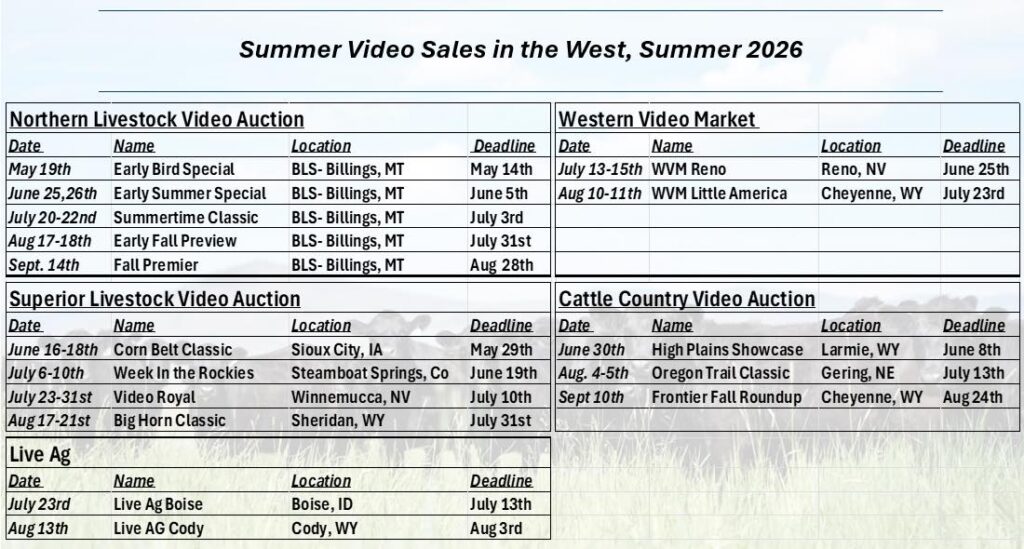
You can view the upcoming video sale season schedule below.
###
Northern Ag Network