


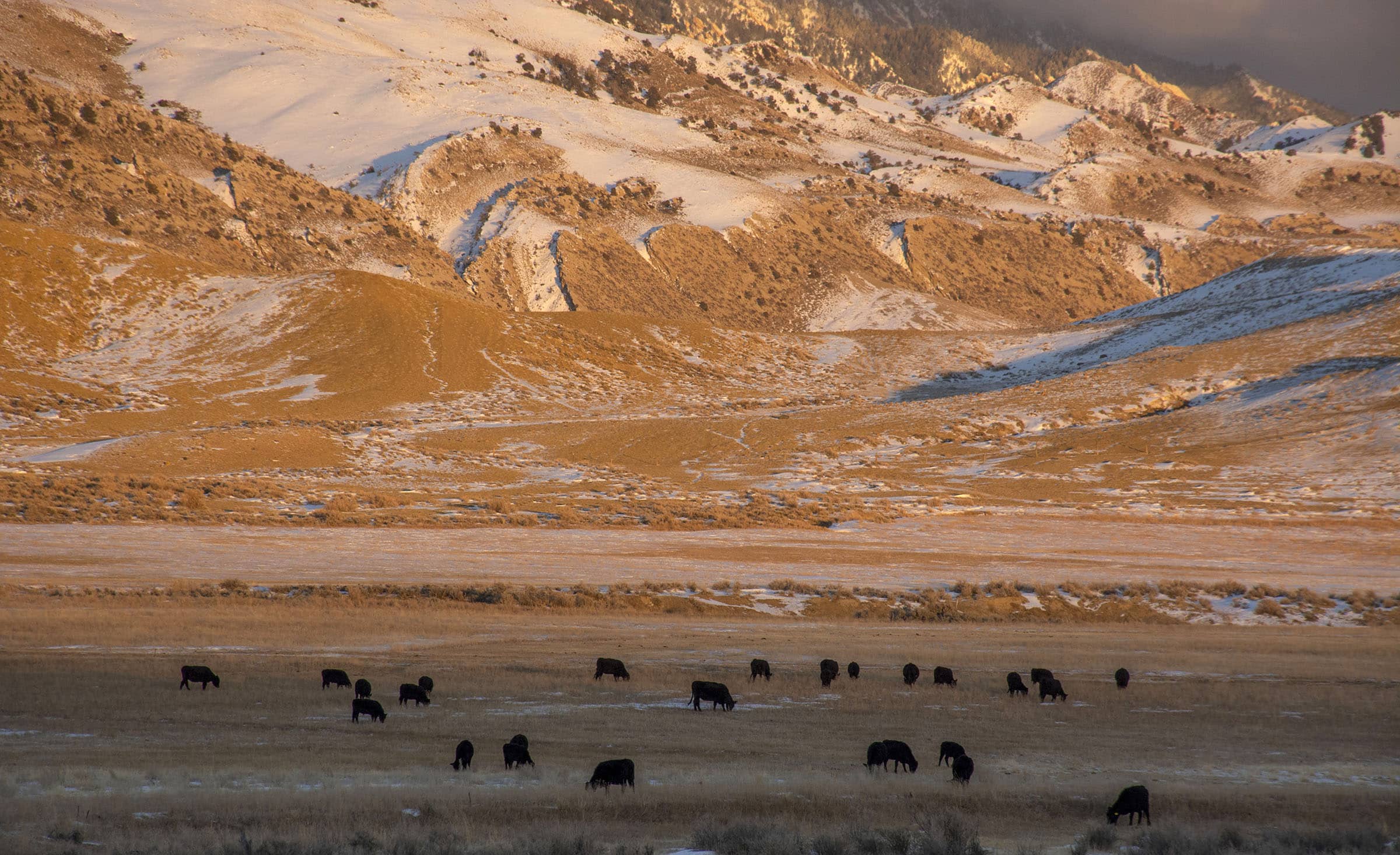
Wyoming agricultural producers are wrestling events outside their control as La Nina off the west coast of the Americas pushes moisture-laden storms on a northern track and seemingly tightening drought’s grip on their rangelands.
National Weather Service charts and models paint a somber mood for the coming growing season. The cool ocean currents of La Nina affect the flow of storms across the northwest, precipitation falling to areas north of much of Wyoming.
Now through May are typically the state’s snowiest months.
“The weather pattern right now is pretty scary,” said Barton Stam, a University of Wyoming Extension rangeland educator based in Hot Springs County. He’s offered drought year grazing strategies to producers attending his presentations at farm and ranch conferences this winter.
Mountain basin snowpack totals are edging toward average and in some places are above normal. That doesn’t help rangelands. The U.S. Drought Monitor map for Wyoming in late February shows extreme drought ballooning in central parts of the state, from the Colorado border to just south of Sheridan County, flowing into Carbon, Sweetwater, Natrona, Fremont, Hot Springs, southeastern Big Horn, Converse and Johnson counties.
Much of the rest of the state is designated severe to moderate.
Producers don’t need weather charts to know their rangelands are dry. They hope the pattern changes and while Stam can’t give out hope, “What we can give them is tools to best manage through drought,” he said.
Extension educator Blaine Horn in Johnson County observed grim conditions on the plains east of the Bighorn Mountains last summer and leading into fall and early winter.
There are no concerns over irrigation water, he said, with water basins nearing snowpack averages.
“As far as the plains goes, we have pretty good snow cover, but snow this time of year contributes little, if at all, to soil moisture for range plant growth this spring and summer,” he said. “So, too early to tell what the upcoming growing season will be like. We will definitely need good late-March to early-June moisture to have a good grazing season as the soil is pretty well dried out.”
Computer models are flipping a coin whether the next three months will see above or below normal precipitation.
Models for February through April predict above normal temperatures, said Geri Swanson, National Weather Service hydrometeorological technician, in a presentation during Worland’s WESTI Ag Days last week. Computer models for the three months call for equal chances of precipitation.
“And that’s just telling us the computer models can’t decide if it’s going to be above or below normal, so they’re giving us equal chances,” said Swanson, based in Riverton. “We could see above, we could see below. There’s just too many variables for the three-month window for them to go either direction for precipitation chances.”
Weather forecasters such as Don Day in his podcasts compare this La Nina’s effects to those in 2011-2012, severe drought periods. Recent, new models predict La Nina’s persistent effects through spring and early summer similar to what happened last year – bad news for Wyoming, Nebraska, Colorado, Kansas, New Mexico, Arizona and California, he said.
Stam said the next three months will indicate snowpack and spring rain precipitation and how much grass there will be for livestock grazing and other forage production.
He said some federal agencies are sending permittees letters stating they are observing conditions and asking permittees to meet with Forest Service rangeland specialists to determine a plan to survive if drought continues.
Stam does that, too. “I want to help permittees or others grazing even on private lands to have a plan in terms of a drought,” Stam said. If drought continues, “We’re going to be working with a reduced supply of forages, so how can we use forages most efficiently? In a lot of cases, that’s going to be distributing livestock in a more effective manner.”
Rangeland plants and agricultural producers have conformed to drought through the years. “Our rangelands have really adapted to drought very well and they recover from droughts very well once they end,” said Stam. “But we definitely need to watch what we are doing now to prepare for the future, so that’s why we want to graze in a sustainable manner so we allow our livestock operations to be profitable.”
Stam urges producers to start planning now. “The thing I want to emphasize going into a year where we are a little bit nervous about drought is getting a plan in action now and if they’re working with federal permits, they should be in meeting with their rangeland management specialists,” he said.
###
UW Extension