

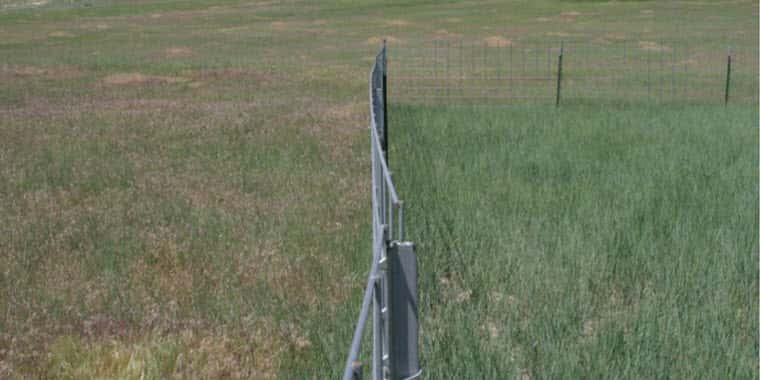
The U.S. Department of Agriculture (USDA) is accepting offers for more than 3.1 million acres from agricultural producers and private landowners through this year’s Conservation Reserve Program (CRP) Grassland Signup, the highest in history. This program allows producers and landowners to continue grazing and haying practices while protecting grasslands and promoting plant and animal biodiversity and conservation, and it’s part of the Biden-Harris administration’s broader effort to address climate change and to conserve natural resources.
“This year’s record-breaking Grassland CRP signup demonstrates the continued success and value of investments in voluntary, producer-led, working lands conservation programs,” Agriculture Secretary Tom Vilsack said. “Grassland CRP clearly demonstrates, time and time again, that conservation priorities and agricultural productivity not only have the capacity to coexist but also complement and enhance one another. Through all our working land conservation programs, farmers and ranchers play a critical role in helping secure the future of both our food production and our natural resources.”
Nationwide, this year’s Grassland CRP signup surpassed last year’s 2.5 million acres by 22%. So far this year, producers have enrolled 2 million acres through the General Signup and more than 464,000 acres have been submitted through the Continuous CRP Signup. This means about 5.6 million acres are entering CRP in 2023, surpassing the 3.9 million acres expiring this year.
Other highlights include:
- Top states included Colorado (642,000 acres), South Dakota (nearly 425,000 acres) and Nebraska (nearly 422,000 acres).
- States with the highest increase in acres compared with last year include Arizona (141% increase), California (129% increase), and Utah (122% increase).
Because Grassland CRP supports not only grazing operations but also biodiversity and conserving environmentally sensitive land such as that prone to wind erosion, USDA’s Farm Service Agency (FSA) created two National Priority Zones in 2021: the Greater Yellowstone Migration Corridor and Dust Bowl Zone. For this year’s signup, FSA expanded the Greater Yellowstone Wildlife Migration Corridor Priority Zone to include seven additional counties across Montana, Wyoming, and Utah, to help protect the big-game animal migration corridor associated with Wyoming elk, mule deer and antelope. FSA accepted offers on more than 1.4 million acres in these two zones.
Grasslands enrolled in CRP help sequester carbon in vegetation and soil, while enhancing resilience to drought and wildfire. Meanwhile, producers can still conduct common grazing practices, such as haying, mowing, or harvesting seed from the enrolled land, which supports ag production.
Producers can still make an offer to participate in CRP through the Continuous CRP Signup, which is ongoing, by contacting the FSA at their local USDA Service Center.
####
USDA – 2022